
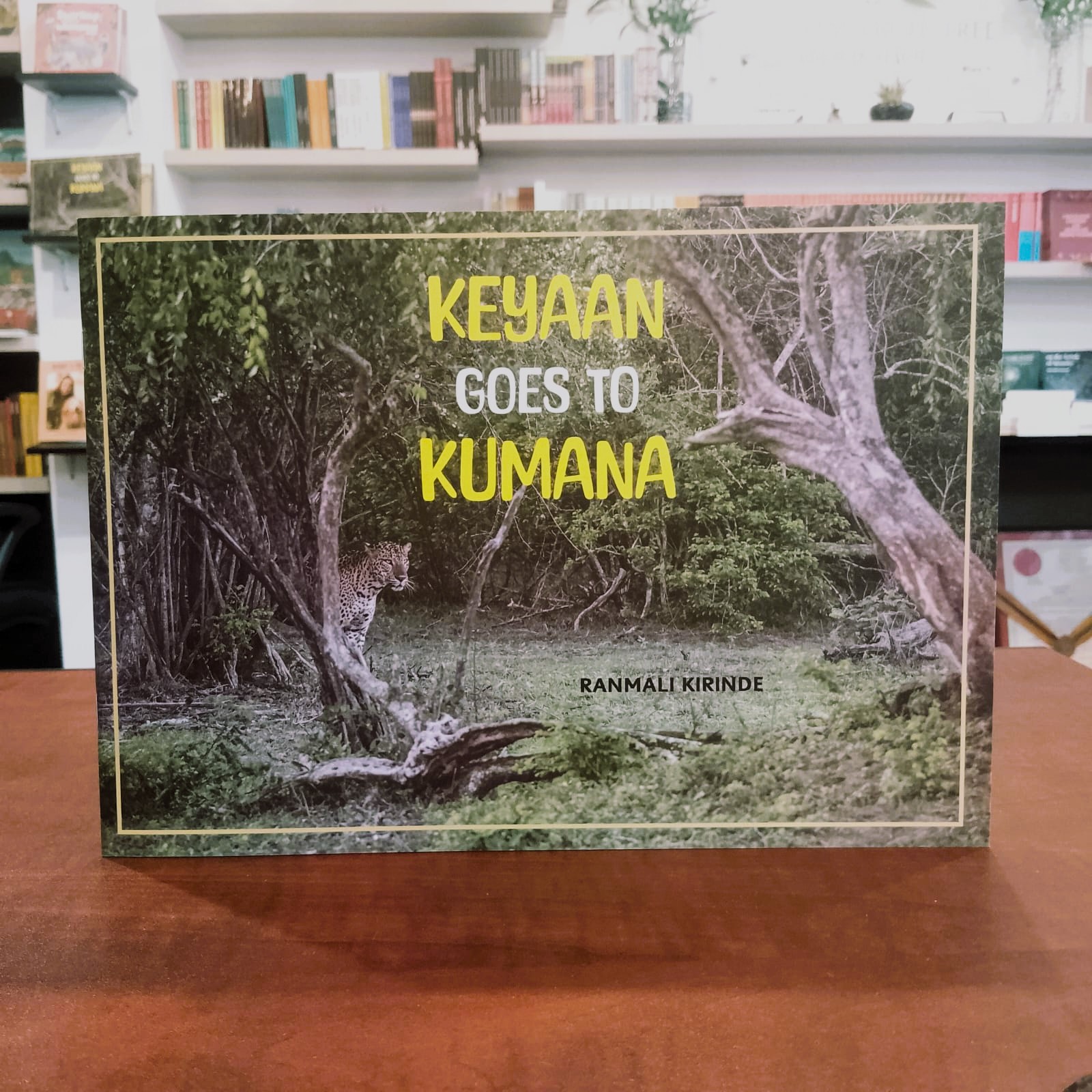
Though her career has been in IT project management, Ranmali Kirinde has always been immersed in stories and the arts. A passionate photographer and lifelong reader, she now adds “children’s author” to her path with the publication of her debut book, “Keyaan Goes to Kumana”, by The Jam Fruit Tree Publications
All the photographs in “Keyaan Goes to Kumana” were taken by Ranmali herself. She explained how she wanted to write a book that includes her photographs along with a simple story. She thought of writing for children because she was inspired by her nephew, who is just three years old and around whom the story is based. Eventually, she had the idea of writing for him so that kids around his age could enjoy the book as well.
Ranmali has been a hobbyist photographer for several years now. This interest began for her around ten years ago. She always had an interest in photography, but never had formal training in it before. Therefore, when she started working, she decided to take a course and learn about it, and later bought a camera and started practising it properly. Afterwards, she joined a photography club and met other photographers as well. Most of the photographers she met were into wildlife photography, but Ranmali initially started with street photography. It’s only after some experience that Ranmali started to travel to nature parks with her camera. Likewise, the author has been taking photographs for a long time and has quite a big collection of photographs, some of them not even been processed yet.
“My nephew did his first trip to wildlife parks when he was only six months old. Since then, he had been to several parks such as Yala and Kumana. When we were travelling together, I had this idea that I should write this story about him going to Kumana and seeing all the animals, in which I can incorporate all my photographs as well,” said the author. Since Ranmali has been spending a lot of time with him and reading a lot of children’s books herself, she decided this book would do well among kids. “Since both my sister and I love to read, we try to encourage reading in Keyaan too. This is, therefore, my attempt to encourage kids like him to read more.”
Ranmali believes that it’s good for children to see actual pictures of the wildlife rather than illustrations of it, and also thinks that it’s important for them to learn about nature and wildlife, which would hopefully encourage them to think about conservation in the long run. Ranmali’s brother-in-law is also a wildlife enthusiast, and it’s a habit of the author to join her sister’s family in their wildlife adventures. Ranmali goes on wildlife tours once every three months and has a couple of other friends who are also photographers. “All the photographs in this book were taken in one trip, and I believe it was Keyaan’s first visit to Kumana. Luckily, I got a lot of pictures that I could use for the story. I consider it a good trip because when you go on wildlife tours, you don’t always see a lot of animals, and it sometimes depends on your luck. On this trip, we were there for several days and had a lot of good sightings and, therefore, good pictures as well. The reason this book is about Kumana in particular is mainly because this idea came to me when I was travelling in Kumana,” she explained.
Ranmali noted how Kumana is less crowded than other popular national parks because it’s further away and there’s not a lot of accommodation nearby. Ranmal’s most favourite shots were the leopard photographs. She mentioned that they could only go out at a certain time and how it is very rare to be able to get shots of these animals. She considers herself lucky to be able to get shots of leopards artistically hidden behind the leaves and trees. She also noted how it was difficult to capture the darters catching fish mid-air, but it also eventually ended up being some of her favourites from her collection.
When Ranmali was putting her book together, she mentioned how she selected the photographs first and then weaved the story together according to the photos. She had an idea in her head that she wanted to make it sound like a journey. Selecting the photos took more time for her than writing them. Ranmali also researched and read articles on how to write a children’s book since writing for children is far more complicated than it seems. There are certain guidelines, such as the word limit and the page limit, that she had to consider when writing for the age group of 1-5 years. Ranmali also went to a writing workshop at the Galle Literary Festival and learned some important writing tips there as well. She recalled how she wrote the first draft within one day and took a few more days to polish it. “I do have a lot of other pictures that I want to compile into another book. I was thinking of doing one with just birds. But I wanted to learn how to rhyme and write my next book on birds in that style. I did print a book with birds just for my nephew, so I want to expand on that and include some rhyming narration in it for my next publication,” said the author.
The special bond she shares with her nephew, Keyaan, was the stepping stone to her book. The author shares how it’s interesting to see how he learns and grows, and the things he says as well. Ranmali recalled how Keyaan is a very active child who loves to be on the move, which she realised is a perfect personality to give to the protagonist of this book as well. Ranmali fondly explained how Keyaan would accompany them delightfully on all their wildlife adventures with his own toy camera, all of which Ranmali considers loving inspiration.
Ranmali hopes her books would encourage children to spend more time in nature and learn more about it, which would consequently heighten their understanding of the value of nature and animals. Since we have a lot of conflicts with animals and other wildlife emergencies spreading rapidly, Ranmali believes that it’s important for children to be educated about nature and more protective towards it from a very young age. Not to look at nature with unnecessary fear but with deep love and care. All because those experiences and lessons leave a lasting impact on them and make them more in tune with nature as they grow up. “Spending time with nature is a good way to disconnect yourself from the fast-paced, chaotic world that we live in. You learn to slow down and be in the moment because nature demands you to be so, and this is a kind of relaxation that surpasses any other. When I was growing up, I didn’t have that opportunity, but I urge parents to give that opportunity to their children,” said the author.
Written by Gayanga Dissanayake